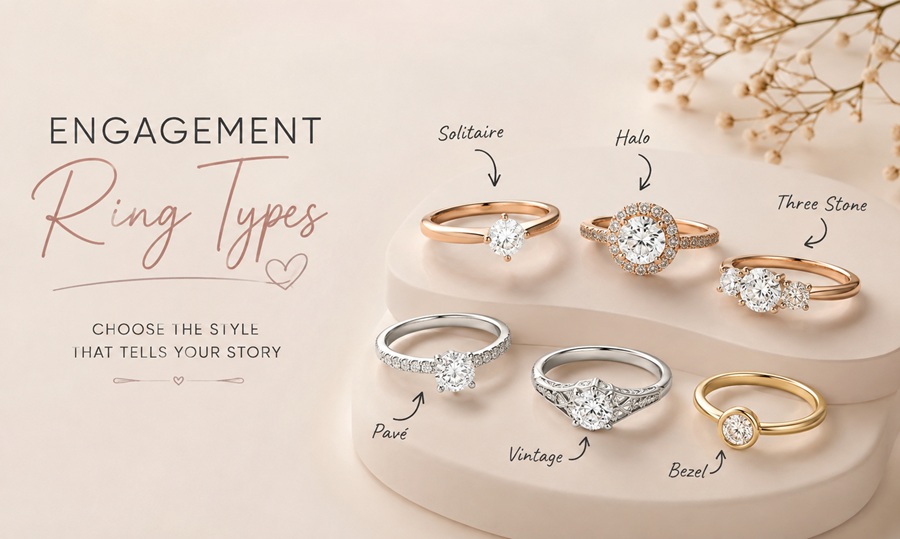
Common engagement ring types include solitaire, halo, three-stone, vintage, pave, bezel, cathedral, cluster, tension, and toi et moi settings. Each style differs in how it showcases the center stone, its durability for daily wear, and its overall price point.
Once you’ve chosen a diamond or gemstone cut, the setting — how the stone is held and styled on the band — shapes the ring’s entire personality. Below is a catalog of the ten most popular engagement ring types, along with what makes each one distinct.
1. Solitaire
The solitaire is the classic, single-stone setting, prized for putting all visual focus on the center diamond without distraction. It’s timeless, versatile, and typically among the more budget-friendly settings since it requires fewer accent stones.
2. Halo
A halo setting surrounds the center stone with a ring of smaller diamonds, making the center stone appear larger and adding extra sparkle. It’s a popular choice for buyers who want more visual size without increasing the center stone’s carat weight.
3. Three-Stone
Also called a trinity setting, this style features a center stone flanked by two smaller stones, often symbolically representing the couple’s past, present, and future. It offers a balanced, substantial look on the hand.
4. Vintage
Vintage-style settings draw on design details from specific historical eras — intricate filigree, milgrain edging, engraved detailing — to create an antique-inspired look, whether using an actual antique stone or a new diamond in a vintage-style setting.
5. Pavé
Pavé settings feature small diamonds set closely together along the band, creating a continuous sparkle effect. It’s a popular way to add brilliance without the higher cost of a larger center stone.
6. Bezel
In a bezel setting, a metal rim fully or partially surrounds the stone, offering excellent protection for active lifestyles. It’s a strong choice for people who work with their hands frequently or simply want extra durability.
7. Cathedral
Cathedral settings feature arches of metal rising up to hold the center stone, resembling the architecture of a cathedral ceiling. This style elevates the stone for extra visual height and sparkle exposure.
8. Cluster
Rather than one dominant center stone, cluster settings group multiple smaller diamonds together to create the illusion of one larger stone. It’s often a more budget-conscious way to achieve a bold visual presence.
9. Tension
Tension settings use the metal band’s pressure alone to hold the stone in place, creating a striking, almost floating appearance. It’s a modern, minimalist choice, though it typically requires more specialized (and costly) craftsmanship and resizing.
10. Toi et Moi
French for ‘you and me,’ this setting features two stones side by side, often in different shapes, symbolizing the union of two individuals. It’s a distinctive, increasingly popular alternative to a traditional single-stone setting.
| Setting | Sparkle Focus | Durability | Typical Price Range |
| Solitaire | Center stone only | High | $ – $$ |
| Halo | Center stone + surrounding sparkle | Moderate | $$ |
| Bezel | Center stone, protected | Very High | $$ |
| Pavé | Distributed along the band | Moderate | $$ |
| Tension | Center stone, dramatic display | Lower (needs specialty resizing) | $$$ |
How to Choose the Right Setting for Your Lifestyle
- Active hands-on lifestyle: consider bezel or low-profile solitaire settings for durability
- Want maximum visual sparkle: halo or pavé settings amplify brilliance
- Prefer a classic, timeless look: solitaire or cathedral settings age well across trends
- Budget-conscious but want a bold look: cluster settings offer visual size at a lower cost
- Want something unique and symbolic: toi et moi or three-stone settings carry built-in meaning
Metal Choice and How It Interacts With Setting Style
The setting style you choose interacts closely with metal choice. Platinum, for example, is naturally white and highly durable, making it a strong pairing for delicate pavé or tension settings where prong strength matters. Yellow gold pairs particularly well with vintage and cathedral styles, lending warmth to intricate detailing, while rose gold has become a popular modern choice for halo and cluster settings, offering a softer, romantic contrast against white diamonds.
Mixing Setting Styles for a Custom Look
Many modern engagement rings blend elements from multiple setting categories — a halo combined with pavé banding, or a cathedral setting paired with cluster accent stones. This kind of combination allows for a more personalized result without committing to a fully custom design process, and most jewelers offer at least some degree of mix-and-match customization even within their existing collections.
How Setting Choice Affects Long-Term Maintenance
Beyond initial appearance, setting style has a real impact on how much upkeep a ring needs over the years. Prong-based settings like solitaire, halo, and three-stone styles require periodic professional inspection, typically every six to twelve months, to check that prongs haven’t loosened from daily wear. Bezel settings, by contrast, need far less frequent maintenance since the metal fully encases and protects the stone’s edges. Pavé settings, while beautiful, are more prone to losing small individual stones over time if not regularly checked, since each tiny diamond has its own set of miniature prongs that can wear down.
Resizing Considerations by Setting Type
Not all settings resize equally easily, which is worth factoring in if your ring size might change over time — a common occurrence due to weight fluctuation, pregnancy, or simply aging. Solitaire and simple halo settings are generally the easiest and least expensive to resize. Eternity bands with stones set all the way around the band, along with tension settings, are considerably more difficult and costly to resize, sometimes requiring the entire ring to be remade rather than simply adjusted. If you anticipate needing flexibility in sizing, this is worth discussing directly with your jeweler before finalizing a setting choice.
Setting Styles That Photograph Best
For couples prioritizing how the ring will look in engagement and wedding photos, some settings simply capture light and detail more dramatically than others. Halo settings tend to photograph exceptionally well due to their concentrated sparkle and larger visual footprint. Vintage and cathedral settings photograph beautifully in close-up detail shots thanks to their intricate metalwork. Simpler solitaire settings, while stunning in person, can sometimes read as more understated in photos unless captured with strong side lighting to catch the stone’s brilliance.
Frequently Asked Questions
What’s the most popular engagement ring setting?
The solitaire remains the most popular and enduring engagement ring setting, prized for its timeless simplicity and versatility.
Which engagement ring setting is best for everyday wear?
Bezel settings are generally considered the most durable and practical option for active, everyday wear, since the metal rim protects the stone’s edges.
What setting makes a diamond look bigger?
Halo settings are specifically popular for making a center stone appear larger by surrounding it with smaller accent diamonds.
Are vintage engagement rings more expensive?
It depends — genuine antique rings can carry a premium for rarity and craftsmanship, but new rings designed in a vintage style are often comparably priced to other modern settings.
What is a tension setting and is it a good choice?
A tension setting holds the diamond in place using the band’s pressure alone, creating a dramatic floating effect. It’s a striking, modern option, though it typically requires specialized jewelers for resizing or repairs.
The right engagement ring setting comes down to balancing personal style, daily lifestyle, and budget. Whether you’re drawn to a classic solitaire or something more distinctive like a toi et moi, understanding how each setting affects sparkle, durability, and price will help you choose a ring that holds up beautifully for decades of wear.