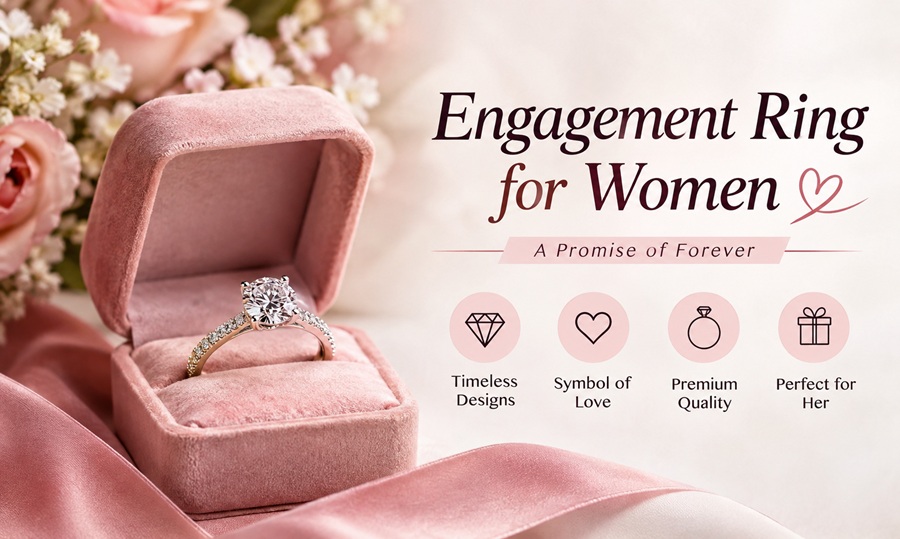
Buying or designing an engagement ring is equal parts exciting and overwhelming, especially with so many style, stone, and budget decisions layered on top of each other. This guide breaks the decision down by budget tier, so you can shop with a clearer sense of what’s realistic and what tends to matter most at each price point.
Budget Tier: Under $1,500
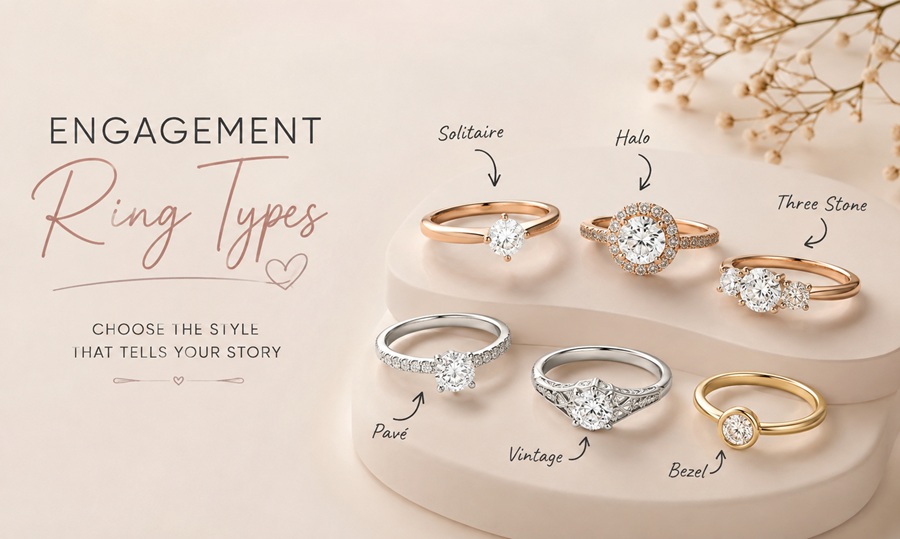
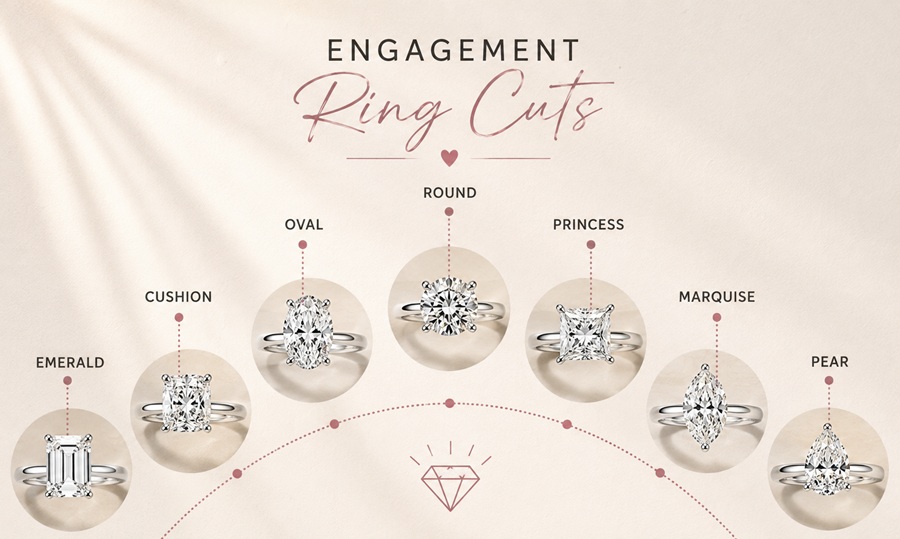
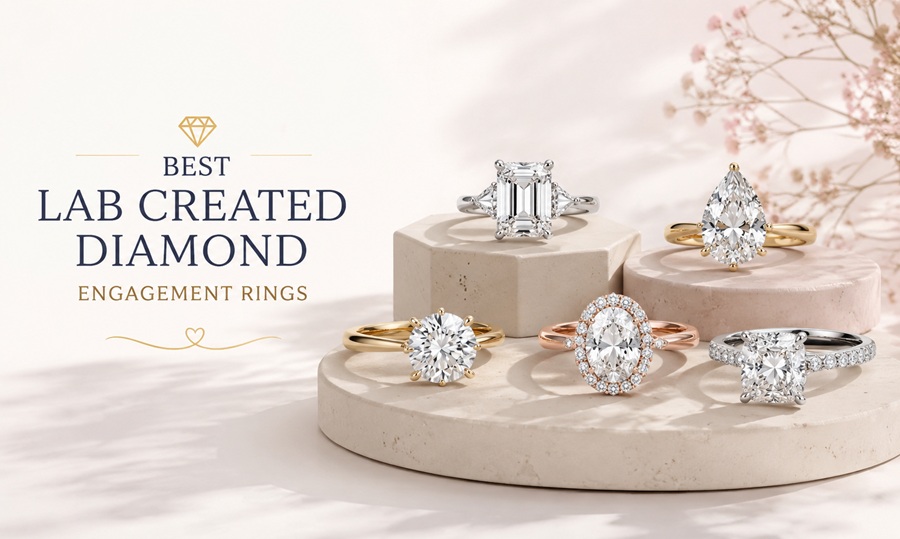
At this range, focus on cuts and settings that maximize visual impact without inflating cost. Princess, marquise, and cluster settings tend to offer more apparent size and sparkle per dollar than round solitaires. Lab-grown diamonds and moissanite are also worth strongly considering here, since they offer significantly more size and clarity for the price than natural diamonds.
Good Options at This Tier
- Lab-grown diamond solitaire in a classic setting
- Moissanite center stone with a halo for extra sparkle
- Cluster setting using smaller natural diamonds
- Sterling silver or gold vermeil band with a modest center stone
Budget Tier: $1,500–$5,000
This is the range where most traditional natural diamond solitaires and mid-size halo settings become realistic. It’s also where metal choice starts to matter more — 14k gold, white gold, and platinum all become viable, each with different durability and maintenance profiles.
Good Options at This Tier
- 75–1.25 carat natural diamond solitaire in platinum or 14k gold
- Halo setting with a 0.5–0.75 carat center stone
- Colored gemstone center stone (sapphire, emerald) with diamond accents
- Vintage-inspired setting with milgrain detailing
Budget Tier: $5,000+
At higher budgets, buyers typically have more flexibility to prioritize larger carat weights, higher clarity and color grades, premium metals like platinum, and more intricate custom design work.
Good Options at This Tier
- 5+ carat natural diamond in a premium cut and clarity grade
- Fully custom-designed setting with intricate detailing
- Rare colored gemstones such as high-quality sapphires or fancy colored diamonds
- Platinum settings for maximum long-term durability
| Budget Tier | Best Stone Options | Best Settings |
| Under $1,500 | Lab-grown diamond, moissanite | Solitaire, cluster |
| $1,500–$5,000 | 0.5–1.25ct natural diamond | Halo, solitaire, vintage |
| $5,000+ | 1.5ct+ natural diamond, rare gems | Custom, premium halo, three-stone |
2026 Style Trends Worth Knowing
Recent buying trends show a continued rise in colored gemstone center stones, particularly sapphires, alongside sustained popularity for elongated cuts like oval and emerald. Toi et moi settings and mixed-metal designs have also gained popularity among buyers looking for something less traditional.
Practical Considerations Beyond Style
- Confirm accurate ring sizing — many jewelers recommend sizing up slightly if unsure, since downsizing is generally easier than upsizing
- Ask about warranty, resizing policy, and insurance options before purchasing
- Consider daily lifestyle — active hands may benefit from more protective settings like bezel
- Factor in maintenance needs, since prong settings require periodic professional inspection
- Request certification (such as GIA or AGS) for natural diamonds above 0.5 carats
| Note: If you’re unsure of her exact preferences, consider a temporary placeholder ring for the proposal and shopping together afterward for the final ring — a growing and widely accepted approach among modern couples. |
How to Gauge Her Style Without Ruining the Surprise
Reading someone’s style preferences without tipping off the proposal takes a bit of quiet observation. Pay attention to the metal tone she gravitates toward in her existing jewelry — gold, white gold, or rose gold — since mismatching this is one of the more common regrets among ring buyers. Notice whether her everyday style leans minimal or more detailed and ornate, and whether she tends to prefer classic, timeless pieces or trend-forward ones. Enlisting a close friend or family member who can ask more direct questions without arousing suspicion is one of the most reliable ways to get real answers without giving away the plan.
Balancing What You Want to Give With What She’d Actually Choose
It’s natural to want the proposal moment to include a ring you’re personally excited about, but the ring is something she’ll wear daily for years, so her taste should carry more weight than your own preferences when the two diverge. If you’re genuinely torn between a style you love and a style you suspect she’d love more, lean toward her likely preference — you can always incorporate meaningful personal touches, like a hidden engraving or a stone with sentimental significance, without overriding her overall aesthetic.
Insurance and Protecting Your Investment
Once a ring purchase reaches a meaningful dollar amount, insurance becomes worth seriously considering, whether through a rider on an existing homeowner’s or renter’s policy or a standalone jewelry insurance policy. Standalone policies typically offer broader coverage, including accidental loss and damage, which many homeowner’s policies exclude or cap at a low limit. Regardless of which route you choose, keep the original receipt, any grading certification, and updated appraisal documentation in a safe place — these are typically required to process a claim, and prices can shift enough over several years that periodic reappraisal is worth doing for higher-value rings.
Shopping Online vs. In-Person
Online retailers have made engagement ring shopping significantly more transparent and often more affordable, thanks to lower overhead and easier price comparison across cuts, clarities, and settings. That said, in-person shopping still offers real advantages: seeing how a stone actually performs under different lighting, trying on settings to judge comfort and proportion on an actual hand, and getting a jeweler’s in-person expertise on subtle qualities that don’t always translate through a screen. Many buyers land on a hybrid approach — researching and narrowing choices online, then visiting a physical jeweler to finalize the decision or verify a stone in person before purchase.
Frequently Asked Questions
What is the average amount spent on an engagement ring?
Spending varies widely by region and personal financial circumstances, though many financial advisors now recommend budgeting based on comfortable savings rather than following outdated income-based rules of thumb.
Are lab-grown diamonds a good choice for an engagement ring?
Yes, lab-grown diamonds are chemically identical to natural diamonds and typically cost significantly less, making them a popular choice for buyers wanting more size or clarity within a set budget.
What metal is best for an everyday engagement ring?
Platinum is the most durable and hypoallergenic option for daily wear, though 14k or 18k white and yellow gold remain popular, more affordable alternatives.
How do I find out her ring size without asking directly?
Common approaches include borrowing a ring she already wears on that finger for a jeweler to measure, or discreetly asking a close friend or family member who may already know.
Should the engagement ring match the wedding band?
It’s not required, but many couples choose complementary metals and styles so the rings look cohesive when worn together, particularly if they’ll be worn stacked.
There’s no single ‘right’ engagement ring for every woman — the best choice reflects her personal style, your shared budget, and practical factors like lifestyle and daily wear. Whether you’re working with a modest budget or planning something more elaborate, the options above should give you a realistic starting point for finding a ring that feels genuinely right, not just impressive.