Tag: love language meaning

  • What Is Love Language Meaning? Explained Simply

    What Is Love Language Meaning? Explained Simply

    Love language meaning, at its core, is about translation — recognizing that the love someone feels and the love someone perceives aren’t always the same thing unless it’s expressed in a form they naturally register. It’s less a personality label and more a communication filter through which affection gets interpreted.

    The Meaning Behind the Term, Explained Simply

    Think of it like two people speaking different native languages. One partner might be fluent in “acts of service” — showing love by doing things — while the other is fluent in “words of affirmation,” needing to hear it said out loud to really feel it land. Both are expressing love genuinely. The disconnect happens when the message gets sent in a language the receiver doesn’t fully understand.

    That’s the practical meaning behind “love language”: not just a preference, but a filter that determines whether an act of love actually registers as love to the person receiving it.

    How This Plays Out in Real Relationships

    Scenario One

    A partner spends an hour fixing something around the house as a gesture of care (acts of service). Their partner, whose language is quality time, barely registers it — because to them, an hour spent apart doing chores doesn’t feel like connection, even though real effort went into it.

    Scenario Two

    A partner sends a thoughtful, unprompted text mid-day (words of affirmation). Their partner, whose language is physical touch, appreciates the gesture but doesn’t feel as deeply moved by it as they would by a hug at the end of a hard day.

    Neither partner in either scenario is doing anything wrong — they’re simply expressing love in their own native language, which isn’t automatically the one their partner speaks fluently.

    The Meaning in Practice: A Breakdown

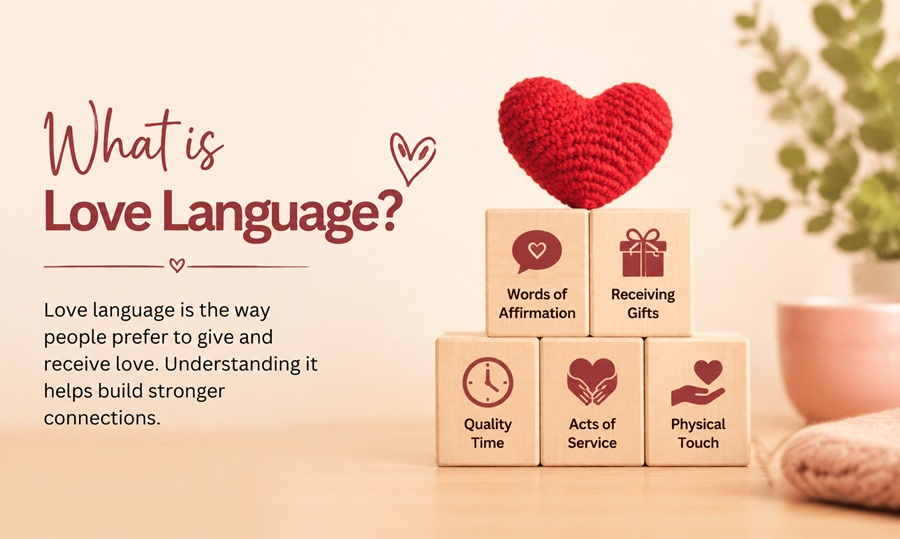
    Love Language What It Means in Daily Life
    Words of Affirmation Feeling loved through spoken or written appreciation
    Quality Time Feeling loved through undivided, present attention
    Acts of Service Feeling loved through helpful action
    Physical Touch Feeling loved through physical closeness and affection
    Receiving Gifts Feeling loved through thoughtful, tangible tokens

    Why This Meaning Matters Beyond the Buzzword

    Understanding the actual meaning behind love language — that it’s about translation, not just preference — shifts how couples approach conflict. Instead of “you don’t love me enough,” the more accurate read often becomes “we’re expressing love in different languages, and one of us isn’t fluent in the other’s yet.” That reframe alone tends to reduce a lot of unnecessary hurt.

    How to Apply the Meaning to Your Own Relationship

    1. Identify your own primary love language through honest reflection
    2. Learn your partner’s, ideally through direct conversation rather than guessing
    3. Practice occasionally “speaking” their language, even when it doesn’t come naturally
    4. Recognize that effort in your own language still counts as love — the goal isn’t to abandon your natural style, just to stretch toward theirs sometimes
    5. Revisit the conversation periodically, since needs can shift with life circumstances

    What the Meaning Isn’t

    • It’s not a rigid box that fully defines someone’s personality
    • It’s not an excuse to avoid effort outside your “natural” language
    • It’s not a scientifically validated psychological category, more a practical communication framework many people find genuinely useful

    FAQ

    Does understanding love language meaning actually fix relationship problems?

    It’s a helpful lens for understanding miscommunication, but it works best alongside broader healthy communication habits, not as a standalone fix.

    Can one partner’s love language change the meaning of gestures over time?

    Yes — as people grow and relationships evolve, what feels most meaningful can shift, which is why revisiting the conversation periodically helps.

    Is it manipulative to ask a partner to speak your love language more?

    No — clearly communicating what makes you feel loved is healthy, direct communication, not manipulation.

    What if my partner refuses to try speaking my love language?

    That’s worth a direct conversation about willingness to meet each other’s needs generally, as it may point to a broader pattern worth addressing.

    Can the meaning of love language apply to non-romantic relationships?

    Yes, the same translation concept applies well to friendships and family relationships too.

    Is love language meaning the same for everyone who shares a primary language?

    Not exactly — even within the same category, the specific gestures that resonate can vary person to person, so ongoing conversation still matters.

    The real meaning behind love language isn’t a label to categorize yourself with — it’s a reminder that love, however genuinely felt, still needs to be translated into a form the other person can actually receive. That small shift in understanding often does more for a relationship than any single grand gesture.