
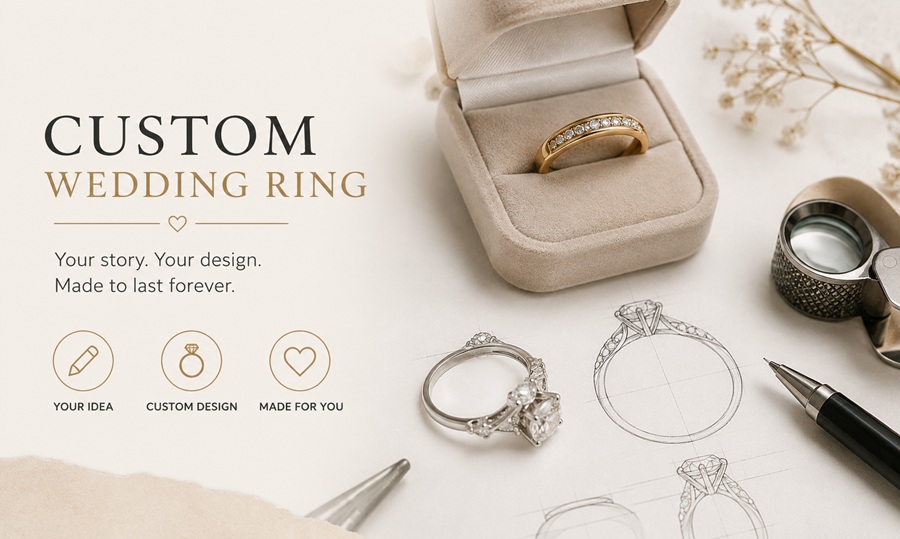
| Quick Answer
Designing a custom wedding ring typically involves consulting with a jeweler, selecting materials and gemstones, approving a 3D or wax model, and waiting several weeks to a few months for production. Costs vary widely, but custom rings often range from slightly above to well above comparable ready-made options, depending on materials and design complexity. |
For couples who want a ring that doesn’t look like everyone else’s, custom design has become an increasingly accessible option — no longer reserved only for high-end, exclusive jewelers. Here’s a clear, step-by-step walkthrough of how the custom wedding ring process actually works, from first consultation to final fitting.
Step 1: Define Your Vision
Before contacting a jeweler, gather reference images, note which existing styles you like or dislike, and think through practical factors like your daily lifestyle and preferred metal. Having even a loose vision — rather than starting from a completely blank page — makes the design consultation far more productive.
Step 2: Choose Your Jeweler
Look for a jeweler with a strong custom design portfolio, not just ready-made inventory. Ask to see examples of past custom work, particularly anything similar in style to what you’re envisioning, and confirm whether the actual crafting happens in-house or is outsourced.
Step 3: Initial Design Consultation
During this meeting, you’ll discuss budget, materials, gemstone options, and overall style. A good jeweler will ask about your lifestyle (hands-on work, allergies to certain metals, ring size history) to guide practical recommendations alongside aesthetic ones.
Step 4: Sketch or CAD Rendering
Most custom jewelers now use computer-aided design (CAD) software to create a detailed 3D rendering of your ring before any physical work begins. This stage typically allows for revisions — adjusting proportions, stone placement, or band width — until you’re fully satisfied.
Step 5: Wax or 3D-Printed Model Approval
Once the CAD design is finalized, many jewelers produce a physical wax or 3D-printed model for you to see and sometimes try on before committing to metal casting. This step catches proportion or fit issues that are hard to judge from a screen rendering alone.
Step 6: Casting and Setting
The approved design is cast in your chosen metal, then any gemstones are carefully set by hand. This stage typically takes several weeks, depending on the jeweler’s workload and the design’s complexity.
Step 7: Final Polish and Quality Check
Before delivery, the ring undergoes polishing, stone security checks, and a final quality inspection to ensure it matches the approved design and meets durability standards for daily wear.
Step 8: Fitting and Delivery
Many jewelers offer one round of minor resizing or adjustment after you’ve had a chance to wear the ring briefly, since fit can feel slightly different once it’s on your hand daily versus during a fitting appointment.
| Stage | Typical Timeframe |
| Design consultation | 1–2 sessions |
| CAD rendering & revisions | 1–3 weeks |
| Wax/3D model approval | 3–7 days |
| Casting and stone setting | 2–6 weeks |
| Final polish and delivery | 1 week |
| Tip: Start the custom design process at least 3–4 months before your target date to allow buffer time for revisions, especially during peak engagement seasons when jewelers’ schedules fill up quickly. |
What Affects Custom Ring Cost
- Metal type (platinum typically costs more than gold or silver alternatives)
- Gemstone size, quality, and rarity
- Design complexity, including intricate detailing or multiple stone settings
- Jeweler’s experience level and reputation
- Number of revision rounds during the design process
Questions to Ask Before Committing to a Jeweler
Before signing off on a custom design, it’s worth asking a few pointed questions: what happens if you’re unhappy with the wax model, how many revision rounds are included in the quoted price versus billed as extra, what the warranty and resizing policy looks like after delivery, and whether the jeweler provides independent certification for any diamonds used. Getting clear answers upfront prevents unpleasant surprises later, particularly around cost creep from unplanned revisions.
Working With a Jeweler Remotely
Custom design used to require in-person visits at every stage, but many reputable jewelers now offer fully remote design processes, using video consultations and digital CAD reviews. This has made custom rings more accessible outside major cities, though it does place more importance on requesting detailed renderings and, when possible, a physical model shipped for review before final casting, since screen renderings can’t fully replicate how a design will look and feel in person.
Sourcing Ethical and Sustainable Materials
Custom design gives couples more direct control over where their materials come from, which has become an increasingly important consideration for many buyers. Ask potential jewelers directly about their sourcing practices — whether they use recycled precious metals, whether diamonds come with conflict-free certification, and whether lab-grown alternatives are available for buyers who want a smaller environmental footprint. A jeweler who can answer these questions clearly and specifically, rather than with vague reassurances, is generally a stronger sign of a transparent, trustworthy operation.
Common Custom Design Mistakes to Avoid
- Skipping the wax or 3D-printed model stage to save time, which risks costly fit or proportion issues after casting
- Not asking upfront how many revision rounds are included before extra fees apply
- Choosing a design purely from inspiration photos without adapting it to your own hand shape and finger length
- Underestimating production timelines, especially during peak proposal seasons like the winter holidays
- Not confirming insurance and appraisal documentation will be provided upon completion
When a Semi-Custom Approach Makes More Sense
For couples who want some personalization without the full time and cost investment of a from-scratch custom design, semi-custom options are worth strong consideration. Many jewelers allow adjustments to an existing base design — swapping metal type, adjusting band width, changing accent stone arrangement — at a fraction of the cost and turnaround time of a fully custom build. This middle-ground approach often satisfies buyers who want something distinct from off-the-shelf inventory but don’t need every design element built entirely from the ground up.
Frequently Asked Questions
Are custom wedding rings more expensive than ready-made ones?
Often, though not always — custom rings can cost more due to design labor and revisions, but choosing simpler custom designs or smaller jewelers can sometimes be comparable to premium ready-made options.
How long does it take to get a custom wedding ring made?
The full process typically takes 6–10 weeks from initial consultation to delivery, though complex designs or busy seasons can extend this timeline.
Can I use my own gemstone in a custom wedding ring?
Yes, many jewelers can incorporate a gemstone you already own, such as an heirloom stone, into a new custom setting.
What’s the difference between a custom ring and a semi-custom ring?
A fully custom ring is designed from scratch, while a semi-custom ring modifies an existing base design with select changes, typically at a lower cost and faster turnaround.
Do I need to know exactly what I want before meeting a jeweler?
No. A skilled custom jeweler can help translate general preferences and reference images into a detailed design during the consultation process.
A custom wedding ring takes more time and often more budget than buying off the shelf, but for many couples, the payoff is a piece that genuinely reflects their story rather than a mass-produced style. If you’re considering it, start the process early, choose a jeweler whose past work resonates with your taste, and don’t rush the revision stage — it’s your best opportunity to get every detail exactly right.


