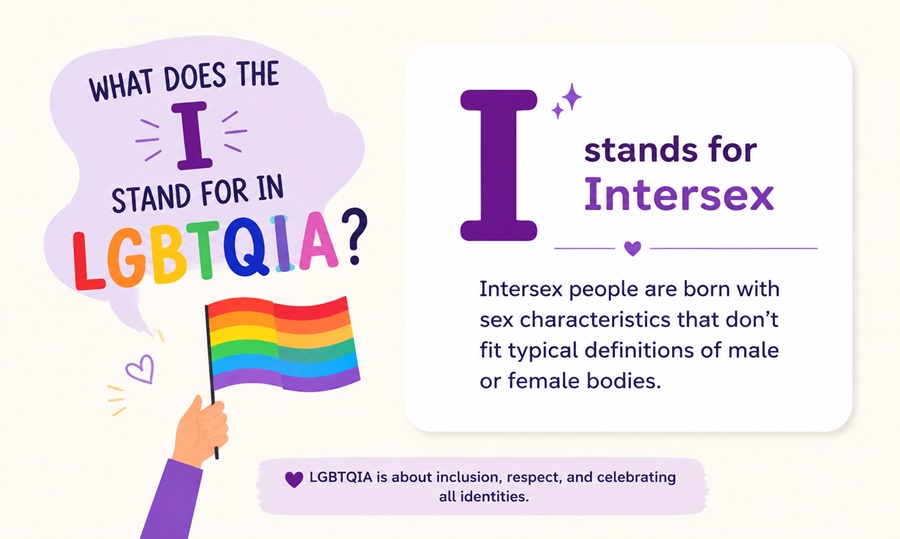
In the LGBTQIA+ acronym, the “I” stands for Intersex, referring to people born with sex characteristics — chromosomes, hormones, reproductive organs, or genitals — that don’t fit typical binary definitions of male or female bodies.
Understanding Intersex as a Biological Term
Intersex is a term describing variations in physical sex characteristics rather than a gender identity or sexual orientation, which distinguishes it from most other letters in the LGBTQIA+ acronym. A person can be intersex and identify as male, female, non-binary, or another gender entirely — being intersex is about the body, not about identity or attraction.
Intersex variations can involve:
- Chromosomal patterns that differ from typical XX or XY combinations
- Hormone levels that don’t align with typical male or female ranges
- Internal or external reproductive anatomy that doesn’t fit typical binary definitions
How Common Is Intersex?
Estimates vary depending on which specific variations are counted, but intersex traits are generally considered roughly as common as some other well-known genetic variations — meaning it’s far more common than most people assume, even though it remains widely misunderstood.
Why Intersex Is Included in the LGBTQIA+ Acronym
Intersex people are included in the broader LGBTQIA+ community partly because they’ve historically faced similar experiences of medical stigmatization, being told their bodies needed “correcting,” and social invisibility — experiences that overlap meaningfully with those of other groups within the acronym, even though intersex itself is about biology rather than identity or orientation.
The Full LGBTQIA+ Acronym Explained
| Letter | Meaning |
|---|---|
| L | Lesbian |
| G | Gay |
| B | Bisexual |
| T | Transgender |
| Q | Queer or Questioning |
| I | Intersex |
| A | Asexual (sometimes also representing Ally in casual usage, though this is debated within the community) |
| + | Represents additional identities not explicitly listed |
Common Misconceptions About Intersex
- “Intersex is the same as transgender.” No — transgender describes gender identity differing from sex assigned at birth, while intersex describes physical sex characteristics that don’t fit typical binary categories.
- “Intersex people always know from birth.” Not always — some intersex traits are apparent at birth, while others aren’t discovered until puberty, fertility struggles, or other life circumstances prompt medical investigation.
- “Being intersex determines someone’s gender identity.” It doesn’t — intersex people identify across the full range of gender identities, the same as anyone else.
Language and Respect
Advocacy organizations generally recommend:
- Using “intersex” rather than outdated or clinical terms some people find stigmatizing
- Not assuming an intersex person’s gender identity based on their physical traits
- Respecting that an individual’s intersex status is personal medical information, not something to ask about casually
Why This Understanding Matters
Historically, intersex infants and children were sometimes subjected to non-consensual surgeries intended to make their bodies conform to typical binary categories — a practice increasingly criticized by human rights organizations and intersex advocates in recent years. Broader public understanding of what “intersex” actually means is part of ongoing efforts to shift medical and social practices toward greater bodily autonomy and informed consent.
FAQ
Is intersex a gender identity? No — it’s a term describing physical sex characteristics, separate from gender identity or sexual orientation.
Can an intersex person identify as any gender? Yes, intersex people identify across the full spectrum of gender identities, the same as anyone else.
Is “hermaphrodite” an appropriate term to use instead of intersex? No — that term is considered outdated and stigmatizing; “intersex” is the current, respectful terminology.
How common are intersex traits? Estimates vary by definition, but intersex variations are generally considered more common than widely assumed, comparable in frequency to some other well-known genetic variations.
Why is intersex included in an acronym focused on sexual orientation and gender identity? Largely due to shared historical experiences of medical stigmatization and social invisibility, even though intersex itself relates specifically to physical sex characteristics.
Do all intersex people identify with the LGBTQIA+ community? Not universally — like any group, individual intersex people vary in how they personally relate to broader community labels and identities.
Summary
The “I” in LGBTQIA+ stands for intersex, representing people born with physical sex characteristics that don’t fit typical binary definitions. It’s a distinct concept from gender identity or sexual orientation, included in the acronym largely due to shared historical experiences within broader advocacy movements.